
No single food prevents or cures cancer. But research shows that certain dietary patterns rich in antioxidants, fiber, and anti-inflammatory compounds may help reduce long-term cancer risk.
This article explains what cancer-fighting foods actually mean in scientific terms and which ingredients are most consistently associated with cellular protection.
This article explains how foods like those shown in the infographic may support the body, what the science actually says, and how to use this information responsibly.
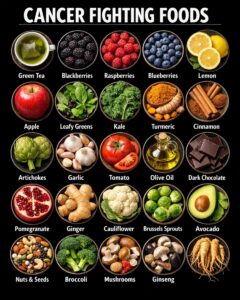
What Are Cancer-Fighting Foods, Really?
Before listing specific foods, it’s important to clarify language.
From a scientific perspective, foods do not:
Kill cancer cells on their own
Replace medical treatment
Guarantee cancer prevention
Instead, many foods help by:
Reducing chronic inflammation
Supporting antioxidant defense systems
Protecting DNA from oxidative damage
Supporting healthy gut and immune function
Over time, these mechanisms are associated with lower cancer risk at the population level, not individual immunity.
Antioxidant-Rich Foods and Cellular Protection
Oxidative stress is one factor involved in DNA damage and cancer development.
Antioxidants help neutralize free radicals before they damage cells.
Foods rich in antioxidants include:
Green tea – rich in catechins such as EGCG
Berries (blueberries, raspberries, blackberries) – high in polyphenols and anthocyanins
Pomegranate – contains ellagic acid and punicalagins
Dark chocolate (70%+ cacao) – provides flavanols
Apples – supply quercetin and soluble fiber
 Evidence note:
A large review published in Nutrients (2019) found that diets high in polyphenol-rich fruits and vegetables are associated with reduced markers of oxidative stress and inflammation.
Cruciferous and Leafy Greens: Supporting Detox Pathways
Certain vegetables contain compounds that support the body’s natural detoxification enzymes, especially in the liver.
Key examples:
Broccoli
Kale
Cauliflower
Brussels sprouts
Leafy greens
These vegetables provide glucosinolates, which break down into biologically active compounds such as sulforaphane.
Evidence note:
Studies in Cancer Prevention Research suggest that sulforaphane may support phase II detox enzymes involved in carcinogen metabolism.
Anti-Inflammatory Foods and Cancer Risk Reduction
Chronic inflammation is increasingly recognized as a contributor to cancer development.
Foods with anti-inflammatory properties include:
Olive oil (extra virgin) – rich in oleocanthal
Turmeric – contains curcumin
Ginger – contains gingerols
Fatty fish – provide omega-3 fatty acids
Avocado – provides monounsaturated fats and antioxidants
Evidence note:
The Mediterranean diet, which emphasizes olive oil, vegetables, fish, and herbs, has been associated with lower cancer incidence in multiple observational studies (BMJ, 2016).
Fiber, Gut Health, and Cancer Protection
Dietary fiber plays a crucial role in gut health and cancer risk, particularly for colorectal cancer.
Fiber-rich foods include:
Whole fruits
Legumes
Nuts and seeds
Vegetables
Whole grains
Fiber supports:
Healthy gut microbiota
Short-chain fatty acid production (such as butyrate)
Regular waste elimination
Evidence note:
A meta-analysis in The Lancet (2018) found that higher fiber intake was associated with significantly lower risk of colorectal cancer.
Functional Foods and Bioactive Compounds
Some foods contain unique compounds studied for their role in cellular signaling and immune support.
Examples from the infographic:
Garlic – sulfur-containing compounds
Mushrooms – beta-glucans
Ginseng – ginsenosides
Artichokes – polyphenols and fiber
Nuts & seeds – antioxidants and healthy fats
These compounds do not act as drugs, but they may support immune balance and metabolic health.
Why Dietary Patterns Matter More Than Individual Foods
Focusing on a single “superfood” misses the bigger picture.
Cancer risk is influenced by:
Overall dietary pattern
Long-term inflammation levels
Metabolic health
Lifestyle factors (sleep, stress, activity)
A diet consistently rich in vegetables, fruits, healthy fats, and fiber creates an internal environment that supports cellular resilience over time.
| Food Category | Key Compounds | Potential Mechanism |
|---|---|---|
| Berries | Anthocyanins | Reduce oxidative stress |
| Green Tea | EGCG | Modulates cell signaling |
| Cruciferous Vegetables | Sulforaphane | Supports detox enzymes |
| Olive Oil | Oleocanthal | Anti-inflammatory |
| Fiber-rich foods | Butyrate production | Gut health & colon protection |
A Responsible Way to Think About Food and Cancer
Instead of asking: “What food fights cancer?”
A better question is: “What daily food choices support long-term cellular health?”
That shift keeps nutrition grounded in science, not fear or false promises.
Scientific References
World Cancer Research Fund (WCRF). Diet, Nutrition, Physical Activity and Cancer.
The Lancet (2018). Dietary fibre intake and risk of cardiovascular disease and cancer.
Nutrients (2019). Polyphenols and human health.
Cancer Prevention Research. Sulforaphane and detoxification enzymes.
BMJ (2016). Mediterranean diet and cancer risk.


0 Comments:
Post a Comment