
Pfizer's Covid-19 vaccine has been launched: here's exactly what it contains
After months of waiting and significant mobilization from the scientific community, the Covid-19 vaccination campaign should soon begin in France, once the necessary authorizations are granted. According to Jean Castex, speaking on December 16, priority will be given to the most advanced vaccines. Among them is the one developed by the American-German alliance, Pfizer and BioNTech. To learn more about it, Ouest-France has reviewed its various ingredients.
Already in use in the United Kingdom, Canada, and the United States, the Pfizer/BioNTech vaccine could soon arrive in Europe. An extraordinary meeting of the CHMP, the committee responsible for reviewing applications for the European Medicines Agency (EMA), has been brought forward to December 21st to issue a possible positive opinion for the use of the German-American vaccine in Europe, according to France Info .
If it receives the green light, the European Commission will have to validate this decision after consulting with member states, which will then allow for the issuance of marketing authorization. Thus, the Pfizer-BioNTech Covid-19 vaccine could arrive sooner than expected. But in the meantime, what do we really know about its ingredients? Ouest-France takes a look.
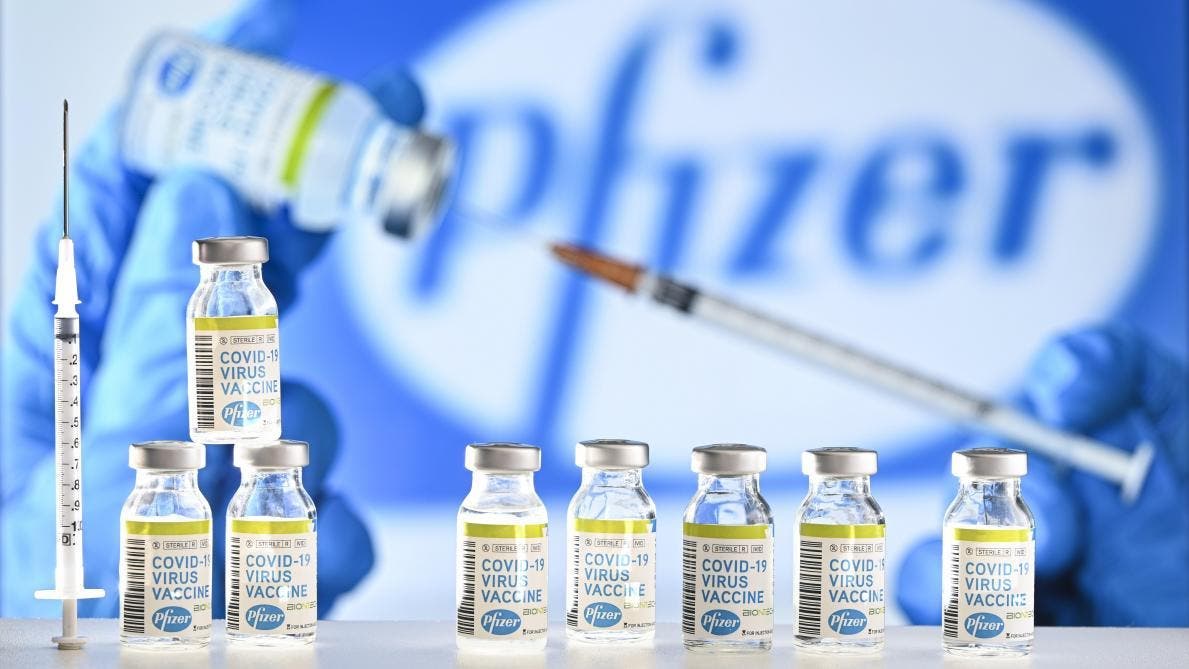
Pfizer and BioNTech vaccine – Source: Le Soir
Sugar, water, fats and a little salt
With data freely available on certain websites, such as that of the U.S. Food and Drug Administration ( FDA ), it is now possible to know the ingredients that make up the Pfizer/BioNTech COVID-19 vaccine. However, these ingredients can seem very complex, especially when relying on their scientific names. In this regard, Futura Sciences has revealed what these names mean in everyday language. Here is what you might find in a small vial of the German-American vaccine.
1. An active ingredient
This substance is, of course, the one with therapeutic properties. The Pfizer and BioNTech vaccine uses a previously unseen technique: messenger RNA (mRNA). The patient will be injected with a lab-made "messenger" that will transmit genetic instructions to the cells. The goal is to trigger an immune response after this messenger integrates into the cells' machinery, so that they produce their own antigens specific to the coronavirus.
Once this process is successful, the antigens will be released and delivered to the immune system. The immune system can then produce antibodies that will act as a defense. Capable of recognizing the virus, these antibodies will be able to neutralize it in case of infection. It's important to note that once the messenger RNA is read, it is quickly eliminated. Thus, contrary to what some fake news stories have claimed, it does not alter our DNA in any way.
2. Lipids
Lipids and fats, necessary for injecting this genetic code into the body, are used to facilitate its penetration into cells, explains Futura Sciences. Indeed, if used in its raw form, it would be immediately destroyed in the extracellular environment. Furthermore, it is these fats that give the vaccine liquid its white or off-white appearance, notes Ouest-France.
3. Sugar, salt, and water
Sucrose, or sugar, is used here for two distinct reasons. First, it acts as a preservative, and second, it prevents the vaccine's nanoparticles from sticking together during the freezing process. Salt, for its part, is present in four different forms in this vaccine. One of these is sodium chloride, in other words, table salt. This helps balance the alkalinity or salinity (pH) of the solution, making it as close as possible to that of our bodies. The principle is simple: to ensure that the vaccine is accepted by our bodies. Finally, water is used to bind everything together.
When will it be available in France?
According to sources close to the matter cited by Les Echos , 2 million doses of the Pfizer/BioNTech vaccine could be available at the beginning of the year if the European Medicines Agency's decision is positive. The French group Delpharm plans to produce multi-dose vials of the vaccine developed by Pfizer and BioNTech at its Saint-Rémy-sur-Avre site, but this process is not expected to begin before April 2021. Therefore, the doses planned for early January are expected to come from other sources. The vaccination campaign planned in France will take place in three phases, according to government guidelines. The first phase will target residents of nursing homes (EHPADs) and people at high risk from the disease. In February and March, an additional 14 million people—those with risk factors related to age, chronic illness, and certain healthcare professionals—are also expected to be vaccinated in stages using the vaccines developed by AstraZeneca and Moderna. An EMA decision on this is expected no later than January 12, 2021. Finally, depending on the doses available, the vaccination campaign should be extended to the general public.


0 Comments:
Post a Comment