
A simple 19th-century drawing of a tree contains a fascinating optical mystery: ten faces hidden in its bark. Some see them instantly, while others have to adjust their gaze. This experiment reveals much about the unique way our brain interprets the world around us.
The visual enigma of an old drawing
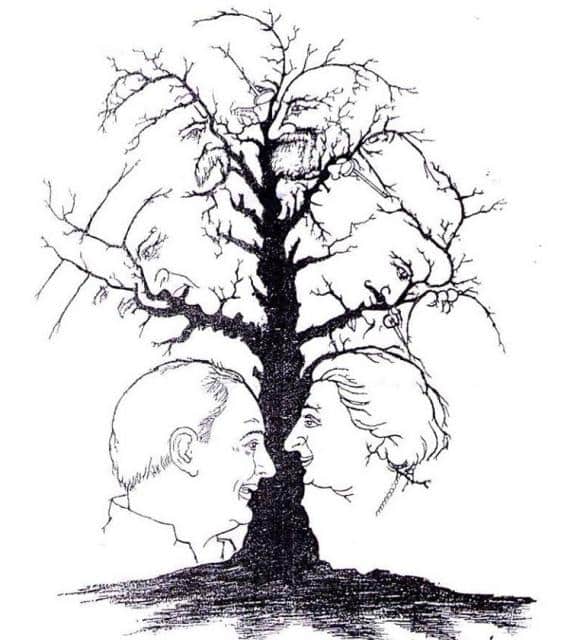
The "Tree of Appearances" has its origins in the distant past. This intriguing illustration is believed to have been published over a century and a half ago in the renowned American magazine Harper's Weekly . What continues to captivate minds is that among the ten human figures hidden in its branches and trunk, some evoke personalities who appeared long after the work's creation. Mere coincidence? A premeditated artistic choice? The enigma remains.
Unlike modern illusions, which are often digitally generated, this one relies on the pure talent of the artist and their subtle interplay of lines and shadows. This authenticity is probably the key to its enduring appeal: after all these years, the image retains its ability to amaze and intrigue every new viewer.
The cognitive phenomenon behind the illusion
This experience can be explained by a universal brain mechanism: pareidolia . Our minds are naturally programmed to detect faces. From our earliest months, they specialize in recognizing facial expressions, sometimes to the point of imagining them where none exist. This is what allows us to guess a face in the contours of a mountain, perceive a smile in electrical outlets, or distinguish a gaze in the patterns of a fabric.
When confronted with the Tree of Appearances , our brain transforms into a veritable detective: it scans the image and assembles visual clues to construct meaning. Some people possess remarkable speed of execution, while others need time to adapt. But once the process is complete, the faces become permanently imprinted in our perception: they become inseparable from the image itself.
What this illusion reveals about ourselves
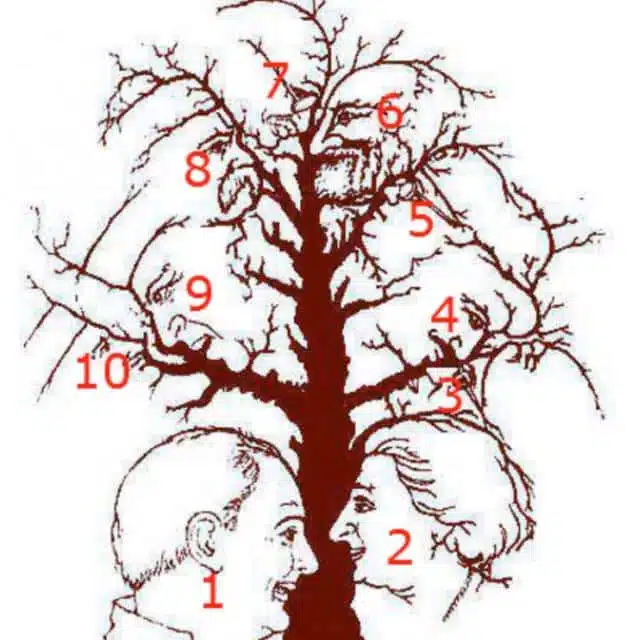
Beyond its entertaining aspect, this illusion teaches us a profound lesson: we never perceive reality in its pure objectivity, but through the unique filter of our cognition. Our experiences, our anticipations, and even our current emotional state literally shape what we see.
Are you stressed and overworked? Your attention is focused on the urgent, missing the subtle details of your surroundings. Are you calm and receptive? Then you'll suddenly notice the play of shadows on a building, the particular expression of a stranger, or the beauty of an architectural detail you'd never noticed before.
The Tree of Appearances then becomes much more than a game: a poetic invitation to slow down, to adopt new points of view and to question the wonders we could discover by simply taking a different look at what surrounds us.
The timeless authenticity of an illusion
In our time, when social media floods our feeds with visual tests and optical challenges promising to reveal our "inner selves," the Tree of Appearances retains a remarkable purity. No digital filters, no special effects: just the skillful hand of a 19th-century illustrator that, even today, continues to inspire wonder and curiosity.


0 Comments:
Post a Comment